New data shows ITV World Cup carbon emissions will be more than double BBC
The Premier League campaign comes to a close on Sunday (24th May), followed by the UEFA Conference League final and the UEFA Champions League finals.
However, the football season continues as the FIFA World Cup shortly follows.
The competition, which takes place every four years, will see both the BBC and ITV cover the matches in the UK.
However, the two broadcasters will be taking different approaches to their World Cup coverage.
The BBC will remain in their studios at MediaCityUK in Salford until the last week of the tournament.

MediaCityUK, Salford - Home to BBC and ITV studios. Photography by Samuel Trowler.
On the other hand, ITV will fly out to New York so that its pundit studio will have views of Manhattan.
This is described as “an attempt to blow away cut-price BBC coverage at the World Cup” by The Telegraph’s Tom Morgan.
However, ITV’s approach raises sustainability concerns for sport and media.
The 2026 World Cup has already been described as the “most polluting World Cup in history.”
Data estimates indicate that carbon emissions will be nearly twice the historical average for previous World Cups.
Dr Madeleine Orr, a leading sport and climate expert, said that this “sends a dangerous message.”
The tournament is the largest in history, with 48 teams competing in the event and 104 matches being played, 40 more than before the tournament expansion.
There are further concerns with FIFA exploring the idea of expanding the competition to 64 teams in the future.
Moreover, the tournament is being played across a whole continent, with games in the United States, Mexico, and Canada.
Therefore, questions about whether ITV should have taken a more sustainable approach to their World Cup coverage must be asked.
Sport and Sustainability
The issue of sustainability in football is not new.
Football clubs, especially in the Premier League, have faced regular criticism from climate experts and activists for their carbon footprint.
Many of the criticisms relate to the transport of Premier League teams, often travelling by aeroplane to domestic matches, ones that critics say could have been reached by train or coach.
However, some clubs have begun to incorporate sustainable practices into their operations.
Liverpool Football Club recently became the first club in the world to be recognised for food sustainability.
The club received the Food Made Good standard for food sustainability across all its operations, including Anfield Stadium and the AXA Training Centre.
The achievement received praise from politicians and activists, including Councillor Tom Crone, the leader of the Green Party at Liverpool City Council.
He said: “Our global food system has a significant environmental impact, so it is encouraging to see a cultural giant like Liverpool FC leading clubs and organisations globally.
“Football has a huge audience in the city and the world, so it can be no bad thing for clubs to be reducing waste.”
Media efforts to pursue sustainability and sport can be traced back to 2018, with Sky Sports partnering with Sky Ocean Rescue to reduce single-use plastics at a cricket match.
The Numbers
To demonstrate the difference in carbon emissions between the two productions, calculations have removed as many variables as possible and made several assumptions.
Additionally, there are too many unknowns, such as energy supply, studio size, and journey times from accommodation to the studio.
Historic data also suggests that transport accounts for up to 65% of a sports production’s emissions.
Therefore, the emissions of ITV staff and BBC staff’s air travel will be compared, assuming flights are from London to New York.
It will also be assumed that all staff required for a production will be in-house and transported, and that the minimum estimate will be used.
As a result, it is assumed the BBC will take as few as 20 staff, whereas ITV will take 60 employees, of which 10% will travel business class and the rest in economy.
ITV
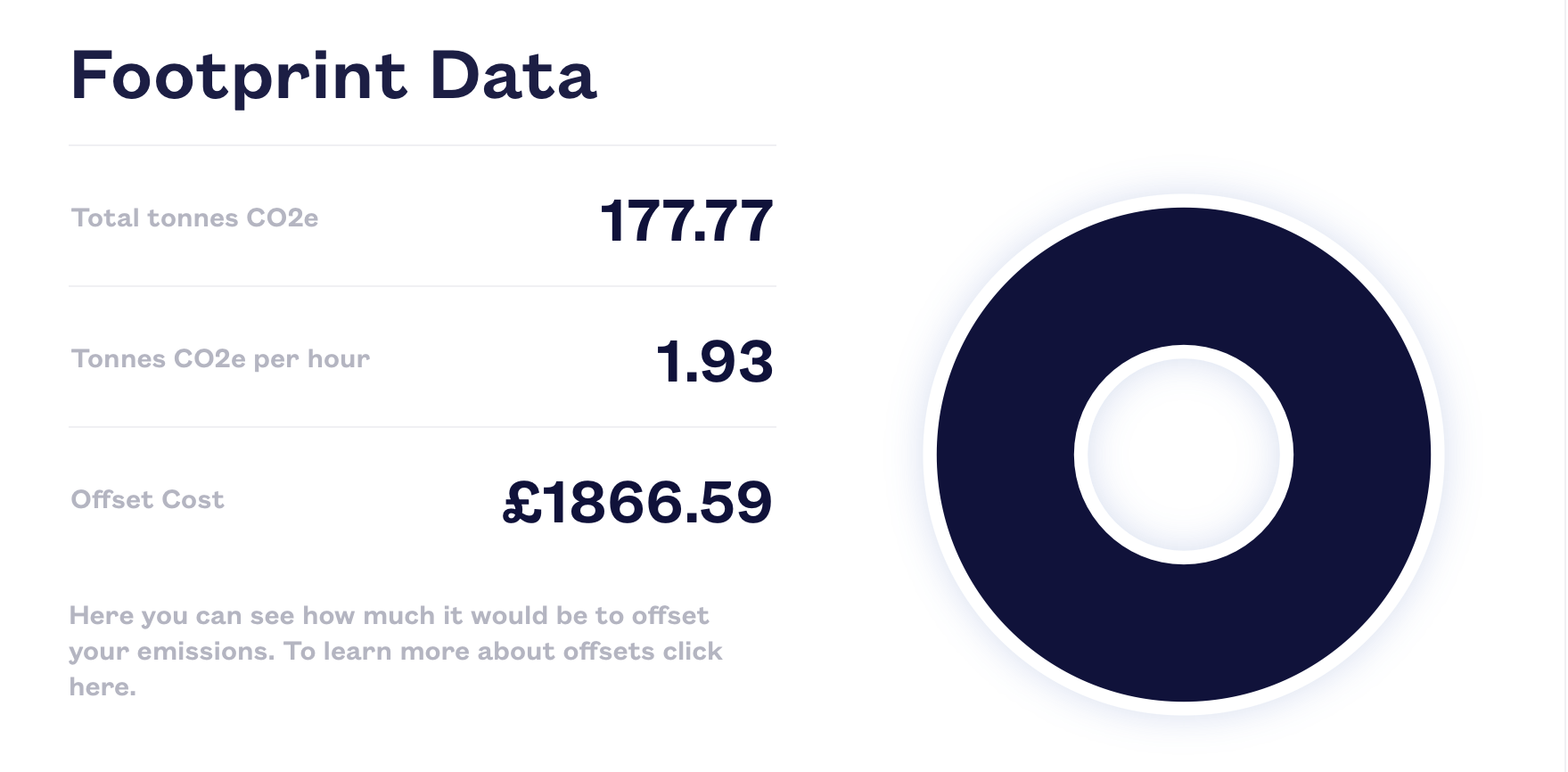
Infographic by Samuel Trowler.
BBC
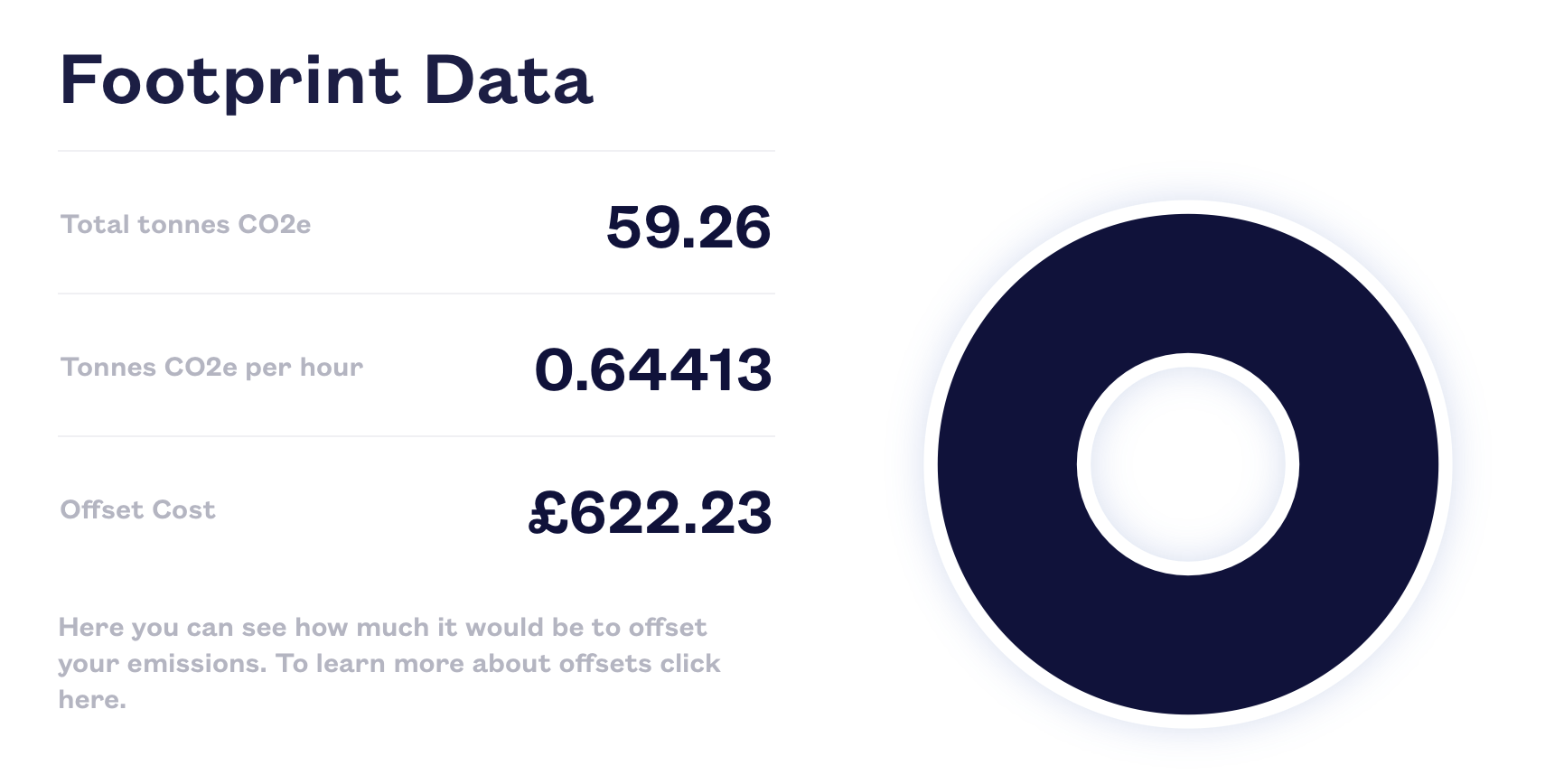
Infographic by Samuel Trowler.
As the data shows, ITV will produce more than 100 tonnes of CO2 from its flights to New York alone, almost 200% more than the BBC.
However, when accommodation, energy and interstate flights are included, the final figure is likely to be much higher.
(All Infographics, Images, Video and Audio by Samuel Trowler)